 Cologne Travel
Guide
Cologne Travel
Guide
Paris is known around the world as the “capital of love,” and even if you don't understand the history of Paris at all

1 Hour
£3.70

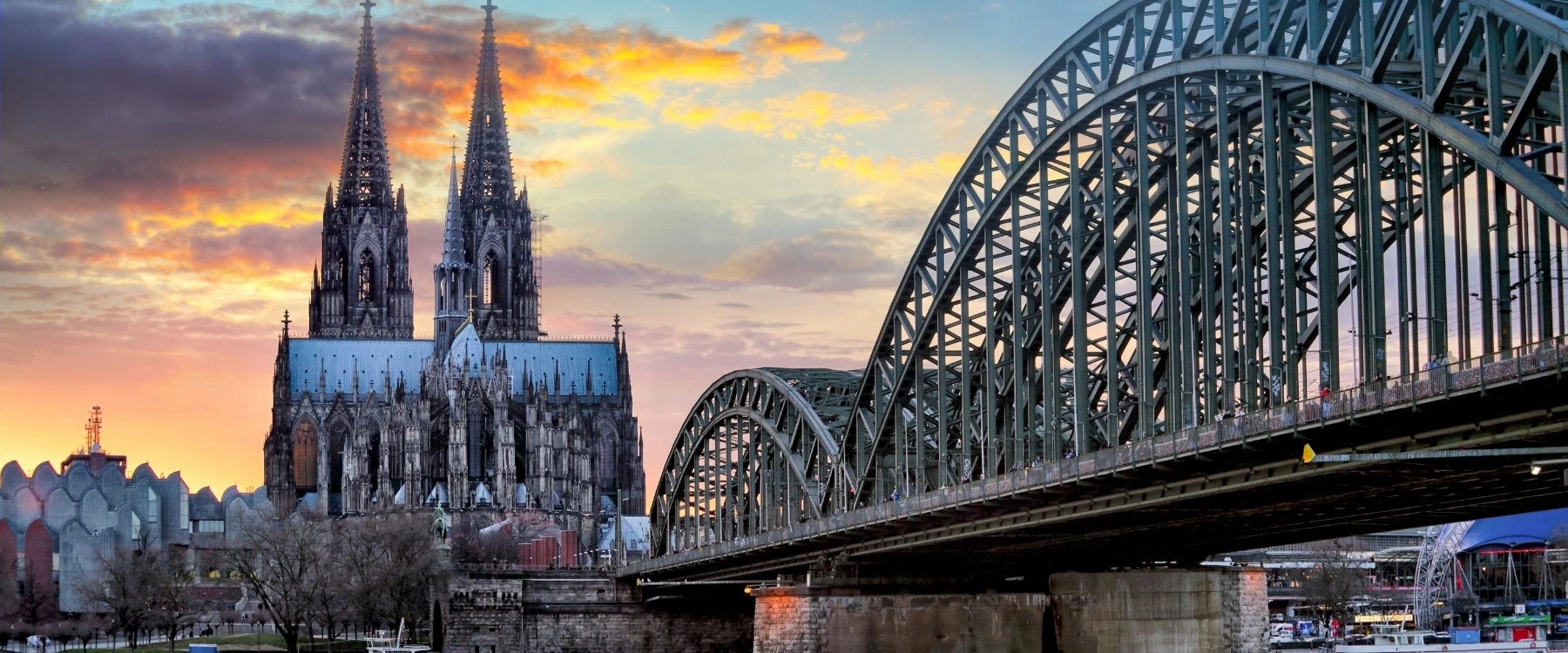
Standing at over 157 meters tall, Cologne Cathedral is Germany’s most visited landmark and an enduring symbol of faith, resilience, and architectural ambition. Its construction spanned centuries, from 1248 to its completion in 1880, reflecting evolving Gothic techniques and the city’s dedication to this monumental project. Visitors can explore the cathedral’s interior, marvel at stained-glass windows, and climb 533 steps to a viewing platform for sweeping vistas over Cologne and the Rhine. Beyond its visual grandeur, the cathedral houses the Shrine of the Three Kings, believed to contain relics of the Magi, making it a site of pilgrimage and profound historical significance. Booking a stay in Cologne ensures you are steps away from this unparalleled treasure, allowing both dawn-lit visits and evening illuminations in a city that reveres its heritage.
Learn More
Cologne’s location on the Rhine imbues it with a relaxed yet dynamic ambiance. The Rhine promenade offers scenic walks, cycling paths, and riverside cafés perfect for people-watching against a backdrop of historic architecture. Boat cruises provide a unique vantage, revealing the city’s skyline from the water and offering themed excursions—from romantic sunset sails to guided commentary highlighting bridges, riverside parks, and nearby castles. Booking Cologne means immersing yourself in this riverside lifestyle: enjoying sunrise reflections on the water, sampling local Kölsch beer at a dockside brewery, and witnessing festive events such as floating lantern ceremonies or Rhine fireworks. The river’s presence integrates nature into urban life, a compelling reason to choose Cologne for your next getaway.
Learn More
Cologne pulses with creativity, evidenced by over 100 galleries, leading art fairs like Art Cologne, and renowned museums such as Museum Ludwig (with one of the largest Picasso collections in Europe). Historic institutions like the Wallraf-Richartz Museum coexist with experimental art spaces in neighborhoods like Ehrenfeld. Booking Cologne places you amid this cultural tapestry: attend avant-garde exhibitions, classical concerts in centuries-old churches, or contemporary performances in converted industrial venues. The city’s art infrastructure invites engagement—workshops, artist talks, and open studios—offering deeper immersion beyond passive viewing. Whether you’re an art aficionado or curious traveler, Cologne’s rich creative landscape promises inspiration at every turn.
Learn More
Cologne’s calendar brims with celebrations that capture its convivial spirit. The Carnival (“Fastelovend”) in February transforms the city into a colorful, jubilant spectacle of parades, costumes, and communal revelry. Christmas markets in December light up historic squares with festive stalls, mulled drinks, and local crafts. Summer festivals celebrate music, film, and food, while seasonal markets spotlight regional produce. Booking Cologne ensures you can align your visit with these immersive events, experiencing genuine local traditions alongside international influences. The city’s festival ethos fosters openness and warmth: strangers quickly become friends over a shared pint of Kölsch, embodying Cologne’s heart as a destination where everyone is welcome and every moment holds celebratory potential.
Learn More
Cologne’s culinary landscape balances hearty Rhineland classics and innovative gastronomy. Traditional breweries serve Kölsch beer in slender glasses, paired with dishes like Reibekuchen (potato pancakes) or Halve Hahn (rye bread with cheese). Local markets brim with fresh produce, sausages, cheeses, and seasonal specialties. Meanwhile, a wave of modern eateries, international bistros, and vegan/vegetarian spots reflect Cologne’s global outlook. Booking Cologne invites you to enjoy guided food tours, brewery visits, and cooking workshops, gaining insight into local ingredients and culinary techniques. The convivial beer hall atmosphere fosters social connection, making dining not just sustenance but a cultural experience. From street food in vibrant quarters to fine dining overlooking the Rhine, Cologne caters to all tastes.
Learn More
Cologne’s excellent connectivity—via Cologne Bonn Airport (CGN), high-speed rail links to Frankfurt, Brussels, and Paris, and proximity to other Rhine cities—makes it an ideal base for exploring Europe. Booking Cologne provides ease of arrival and departure: direct flights from major UK airports; efficient local public transport; and well-developed infrastructure for cyclists and pedestrians. Central location allows day trips to fairy-tale Rhine Valley castles, historic Bonn, or vibrant Düsseldorf. Moreover, Cologne’s well-signposted visitor information, multilingual services, and accessible amenities ensure a smooth experience for international travelers. Choosing Cologne means prioritizing convenience without sacrificing authenticity and depth of experience.
Learn More
Lorem ipsum dolor, sit amet consectetur adipisicing elit. At illo adipisci iusto
From

Because more than 268 other customers have loved us too

Demonstrates commitment to user data security through encryption and secure payment practices
Learn More
Demonstrates commitment to user data security through encryption and secure payment practices
Learn More
Demonstrates commitment to user data security through encryption and secure payment practices
Learn More
Demonstrates commitment to user data security through encryption and secure payment practices
Learn More
Quality as judged by customers. Book at the ideal price!


/ person
/ person
/ person

Cologne Cathedral stands as the centerpiece of Cologne’s medieval heritage and an enduring testament to Gothic architecture. Initiated in 1248 but not completed until 1880, its twin spires at 157 meters tall make it one of the tallest cathedrals in Europe. The extended construction period reflects shifting political, financial, and artistic influences across centuries. Inside, elaborate stained glass windows cast colored light on stone floors, and chapels house relics, notably the Shrine of the Three Kings, believed to hold remains of the Magi—a major pilgrimage draw. Visitors can ascend 533 steps in the south tower for panoramic city and Rhine views; though physically demanding, the ascent offers closer inspection of ornate stonework and a compelling sense of accomplishment.Beyond the cathedral, Cologne’s Roman origins surface in archaeological sites such as the Praetorium and remnants of city walls, accessible via underground exhibitions. The Roman-Germanic Museum showcases artifacts like mosaics, sculptures, and everyday items, illustrating life two millennia ago. Walking through the Altstadt, cobblestone alleys and reconstructed medieval façades evoke past eras, while markers highlight former city gates and guild houses. The historic Town Hall (Rathaus), with its Renaissance loggia and Gothic tower adorned with ornate sculptures, narrates civic pride and evolving architectural styles over eight centuries.Historic churches like Groß St. Martin, with its distinctive tower, and St. Aposteln reveal Romanesque influences and community continuity. The Farina Fragrance Museum, located in an 18th-century building, commemorates the birthplace of Eau de Cologne: a fragrant window into Enlightenment-era commerce and daily life. Educational guided tours often weave these elements into storytelling journeys, animating legends and lesser-known anecdotes: medieval guild rivalries, wartime survival stories, and post-war reconstruction efforts that restored much of the Old Town. Understanding Cologne’s layered heritage provides context for its modern identity: a city resiliently rebuilt after World War II’s extensive damage, yet committed to preserving and celebrating its deep historical roots.

Cologne’s museum landscape is remarkably diverse, catering to archaeology enthusiasts, art lovers, and specialized interests. Museum Ludwig, adjacent to the cathedral, houses one of Europe’s foremost modern art collections, featuring extensive works by Picasso, Pop Art icons, and contemporary installations. Its striking post-war building itself embodies mid-20th-century architectural innovation. Nearby, the Wallraf-Richartz Museum presents European art from medieval to early 20th century, including masterpieces of Flemish and German painters. For chocolate aficionados, the Chocolate Museum (Schokoladenmuseum) offers an interactive journey through cocoa history, production processes, and tastings, overlooking a reflective Rhine pool with a mock rainforest exhibit.The Romano-Germanic Museum reveals Cologne’s ancient past through well-preserved Roman artifacts, while the Rautenstrauch-Joest Museum explores world cultures, highlighting global connections and colonial histories. For religious art, the Museum Schnütgen displays sacred objects, sculptures, and liturgical items spanning Gothic to Baroque periods. The Farina Fragrance Museum invites olfactory discovery of the world’s first branded perfume. Contemporary art spaces dot neighborhoods: in Ehrenfeld, galleries showcase experimental works; in the Belgian Quarter, curated exhibitions blend local artists with international voices.Specialty institutions include the NS Documentation Centre (EL-DE Haus), a poignant site preserving records of National Socialism and resistance in Cologne, fostering reflection on 20th-century history. The Cologne Cable Car Offerings: while not a museum per se, the cable car crossing the Rhine affords unique aerial perspectives linking historical and modern cityscapes. Many museums provide multilingual audio guides, interactive displays, and thematic workshops—ideal for deep engagement. Museum passes and combined tickets can offer savings, and quieter weekday mornings are optimal for contemplative visits. Exploring Cologne’s museums enriches understanding of its cultural legacy, creative spirit, and global dialogues.

The Altstadt remains the beating heart of Cologne’s urban life: narrow lanes, historic squares, and riverside promenades invite exploration on foot. Starting at the cathedral plaza, you enter a network of pedestrianized streets lined with jewel-toned buildings housing cafés, boutiques, and traditional breweries. The Alter Markt and Heumarkt squares host seasonal events—Christmas markets in winter and open-air concerts in summer. Quaint courtyards reveal hidden gems: artisan workshops, gallery pop-ups, and local artisans selling handmade goods. Traditional pubs serve Kölsch beer in 0.2-liter glasses, fostering conviviality as servers circulate with trays of fresh pours, encouraging shared toasts.Walking west along the Rhine promenade, tree-lined paths offer scenic vistas: reflections of bridge arches and cathedral spires in the water. Benches and grassy embankments beckon picnics; boat rental stations allow leisure paddling. The Hohenzollern Bridge, famous for love locks, connects to the right bank promenade, providing iconic photographic opportunities at sunrise or sunset. Riverside cafés serve light fare, perfect for pausing amid exploration. The promenade also links to event spaces for festivals—film screenings or riverbank concerts.Beyond the immediate Old Town, adjacent districts reveal different facets of Cologne’s urban character. The Belgian Quarter (Belgisches Viertel) buzzes with fashion boutiques, design shops, and trendy cafés; street art adorns murals, reflecting a youthful, creative ethos. Southern districts like Neustadt-Süd offer green retreats in Stadtgarten or Volksgarten parks, where locals jog, picnic, and attend open-air events. Ehrenfeld, a former industrial area, has transformed into a cultural hotspot with multicultural eateries, live music venues, and repurposed warehouses hosting art studios. Each neighborhood’s unique vibe underscores Cologne’s diversity: a city where tradition and innovation coexist across compact, navigable quarters.

Cologne’s shopping landscape caters to varied preferences, from major retail streets to niche markets. Schildergasse, Europe’s busiest shopping street, offers flagship stores, global brands, and pedestrian-friendly thoroughfares. Adjacent Hohe Straße continues the retail artery, featuring department stores and specialty shops. For luxury and local design, the Belgian Quarter’s boutiques showcase independent fashion labels, artisan jewelry, and homeware, reflecting Cologne’s creative pulse. Concept stores blend art and retail, with curated selections of books, crafts, and limited-edition items.Markets are integral to Cologne’s lifestyle: weekly farmers’ markets such as the Severinsmarkt and Rudolfplatz markets offer fresh produce, regional cheeses, baked goods, and flowers. The Rheinauhafen district hosts weekend markets with crafts, street food, and sustainable products. Seasonal markets—autumn harvest fairs or Christmas markets—combine shopping with festive ambiance: wooden stalls lit by twinkling lights, music, and local delicacies. For vintage and flea enthusiasts, regular flea markets in Ehrenfeld or Südstadt yield eclectic finds: retro clothing, vinyl records, and antique curiosities.Book lovers can explore Walther König bookstore near the cathedral, celebrated for its art and architecture sections. Specialty shops sell Cologne’s signature Eau de Cologne fragrances, handcrafted by historic perfume houses. Tech and gadget stores cluster around central districts, while local designers open pop-up events during Cologne Fashion Week. Shopping in Cologne balances convenience (central pedestrian zones) with discovery (hidden alley boutiques), ensuring retail experiences that reflect the city’s dynamic character and respect for heritage.

Cologne Carnival, locally known as Fastelovend, transforms the city into one of Europe’s most exuberant street festivals each year. While official festivities begin with the so-called “Little Carnival” on 11 November at 11:11, the true crescendo arrives during the “crazy days,” from Weiberfastnacht (Women’s Carnival Day) through Shrove Tuesday and into Ash Wednesday. During this period, Cologne’s historic center and surrounding neighborhoods erupt in color, laughter, and collective revelry. Crowds of “Jecken” (carnival fools) don elaborately themed costumes—ranging from satirical political caricatures to classic Harlequin and Pierrot ensembles—seizing the opportunity to invert everyday roles in the spirit of “die fünfte Jahreszeit” (the fifth season).The highlight of the week is the Rose Monday Parade (Rosenmontagszug), when more than 100 floats, each designed by volunteer committees over many months, glide through downtown streets. Accompanied by dozens of marching bands, dance troupes in synchronized routines, and carnival societies tossing millions of sweets (Kamelle) into cheering throngs, the parade embodies Cologne’s irrepressible joie de vivre. Spectators stake out viewing spots along the 7-kilometer route early in the morning; seasoned locals bring folding chairs, warm drinks, and picnic baskets to wait out the day together.Participating fully in Carnival requires embracing local customs. Spontaneous singing of “Kölsche Lieder” (Cologne songs) fosters unity between visitors and natives, while friendly heckling—“Pappnasen” (paper noses) and “Strüßjer” (bouquets) exchanged with perfect mock gravity—cements the carnivalesque camaraderie. Pubs and breweries in the Old Town host festive mass gatherings, pouring the region’s signature Kölsch beer in its characteristic tall, narrow glasses, often served in trays of twenty (Kranz). Traditional Carnival sessions (Sitzungen) in theater halls combine sharp wit, music, and comedic speeches—reservations are essential weeks in advance.Costume rentals and concierge services in Cologne make it easy for travelers to join in; many hotels partner with local designers to supply masks, hats, and themed outfits. Photography enthusiasts find endless subjects in the streets, cafés, and squares, but should always ask permission before photographing intimately costumed revelers.After the main parades conclude, Cologne’s slower “Tosender Montag” pleasures include “Jeckensitzung” brunches in beer halls, children’s Carnivals with mini-parades, and a final farewell on Ash Wednesday with traditional fish dinners. Beyond the spectacle, Carnival embodies Cologne’s resilient, inclusive spirit; its centuries-old roots in medieval guild traditions remind visitors that sometimes the greatest gift is to laugh, dance, and celebrate community without reservation. Planning a February trip around Fastelovend promises an unforgettable immersion in one of the world’s most spirited cultural events—just be sure to book accommodations and tours well ahead, as the city’s capacity is stretched to its limits during these joyful days.

Cologne’s cultural calendar sparkles year-round with festivals and markets that cater to every taste. As winter’s chill subsides, spring ushers in Art Cologne, one of the world’s oldest art fairs, where galleries and artists converge in the trade fair halls to showcase masterpieces from classical to cutting-edge contemporary works. In April, the Rhein in Flammen (“Rhine in Flames”) event lights up riverside vistas with choreographed fireworks synchronized to live music, drawing locals and visitors alike to party boats and embankment gatherings.When temperatures rise in summer, open-air stages along the Rhine host a tapestry of music festivals: Jazzfest Bonn offers smooth saxophone riffs in historic halls, while c/o Pop festival in summer showcases indie, electronic, and alternative acts in urban venues. Film buffs flock to the Cologne Short Film Festival and summer cinema series held beneath the cathedral’s towering spires, where international filmmakers screen their works against a dramatic Gothic backdrop.Culinary celebrations pepper the warm months: during Spargelsaison (white asparagus season) in May and June, restaurants throughout the city create inventive menus starring this regional delicacy; visitors can even join asparagus-harvesting tours in nearby farming villages. July’s Street Food Festival at Tanzbrunnen brings a global parade of flavors—Korean BBQ, Venezuelan arepas, North African tagines—while local craft brewers pour seasonal Kölsch variants at the Cologne Beer Festival.Autumn transitions Cologne into harvest mode. Wine festivals in the nearby Ahr and Mittelrhein valleys invite guests to taste crisp Rieslings and hearty Spätburgunders amid golden vineyards. The Day of German Unity on 3 October sparks public celebrations and open-air classical concerts. As leaves turn, museum nights reveal hidden collections with extended opening hours, live performances, and late-night gallery crawls.When winter arrives, Cologne blossoms with Christmas markets that rank among Germany’s finest. The Cathedral Market, set against the UNESCO-listed cathedral’s twin towers, enchants with artisan handicrafts, warm Glühwein, and smoky bratwursts. At Alter Markt, a medieval-themed market features horse-drawn wagon rides and falconry displays, while the Harbour Market at Rheinauhafen docks infuses maritime flair into festive stalls. Illuminated light sculptures and ice rinks complete the yuletide ambiance.Cologne also celebrates cultural diversity throughout the year: the Asian Food Festival in summer, Carnaval der Kulturen in spring, and Pride events in July underline the city’s inclusive ethos. Even off-peak months host intimate literary evenings in bookshops, experimental theatre pop-ups, and improvised jazz sessions in hidden courtyards.Planning your visit around these seasonal highlights enriches any Cologne itinerary. Yet, even outside major festivals, you’ll discover weekend flea markets, spontaneous street performers, and the city’s inviting cafés where you can bask in local life. Whether you’re sampling asparagus at a porch-side stall or marveling at fireworks over the Rhine, Cologne’s festivals and markets promise continuous celebration of art, flavor, and community throughout the year..

The Rhine River is not merely Cologne’s scenic backdrop—it’s the artery that pulses with outdoor adventure and recreational possibilities. From leisurely river cruises to action-packed cycling and kayaking, the Rhine offers a wealth of experiences for active travelers and nature lovers alike.Daily boat excursions depart from Cologne’s historic Rheinufer, gliding downstream toward the UNESCO-listed Upper Middle Rhine Valley. Here, fairytale castles perch atop limestone cliffs, and terraced vineyards produce world-renowned Rieslings. Onboard guides regale passengers with centuries-old legends of knights, feuding counts, and the Lorelei rock’s siren mysteries. Some boats feature open decks for panoramic photo ops, while others provide multi-course lunches showcasing regional specialties—cold cuts, river trout, and local wine tastings.For those who prefer two wheels to two decks, the Rhine Cycle Route (EuroVelo 15) beckons. Well-marked paths lead southward through leafy promenades, historic suburbs, and quaint towns like Bonn and Königswinter. E-bike rentals at Cologne Hauptbahnhof ensure even novice cyclists can tackle moderate inclines with minimal effort. Along the way, you can pause at riverside beer gardens, medieval fortresses, and artisan cheesemongers, before returning to Cologne via train for convenience.Kayakers and stand-up paddleboarders find calm conditions in designated sections of the Rhine near Cologne’s city limits. Guided kayak tours introduce paddlers to urban and rural vistas in a single day—gliding past modern skyline reflections and into sheltered canals where waterfowl nesting sites abound. Safety briefings cover local current patterns and boat-traffic protocols, ensuring seamless adventures for all skill levels.Within the city, Rheinpark offers 40 hectares of green space, perfect for family picnics, volleyball matches, or open-air yoga sessions. In summer, a cable car spans the river to the opposite bank, delivering breathtaking aerial views of the cathedral and the Pfälzer Weinstrasse beyond.For an off-beat challenge, join a “Rhine barefoot path” event in nearby Hürth where participants traverse smooth pebbles, sand, and grassy meadows shoeless—perfect for sensory connection to nature. Nature reserves along the floodplains host birdwatching safaris; spring migrations paint the sky with flocks of herons, storks, and egrets.Winter transforms the Rhine into a domain of crisp riverside walks, reflective photography sessions at dawn, and cozy café stops serving hot chocolate and specialized “Rhine gingerbread.” Guided walking tours focus on industrial heritage—former shipyards and riverside factories—adding a layer of urban exploration.Cologne seamlessly blends urban energy with accessible outdoor pursuits. Whether you cruise past castles, bike through vineyard hills, paddle beneath historic bridges, or stroll misty riverbanks, Rhine excursions and adventures promise dynamic engagement with nature just steps from the city’s heart.

Cologne offers an abundance of attractions tailored to families, blending education, entertainment, and open-air fun to delight children and adults alike. At the heart of family adventures is the Chocolate Museum, housed in a striking glass-and-steel building by the river. Here, kids watch as cocoa beans transform into liquid chocolate, sample truffles fresh from the conveyor belt, and take part in interactive workshops to mold their own sweet creations. Upstairs, a rooftop café provides panoramic views of the Rhine while serving all-you-can-eat chocolate fondue for the ultimate treat.Science-minded families head to the Odysseum Science Center in Cologne-Porz, an immersive discovery space filled with hands-on exhibits on physics, biology, and space exploration. Children can pilot virtual spacecraft, launch water rockets, and decode secret messages in the outdoor adventure playground, all under professional supervision.Cologne Zoo, one of Germany’s oldest zoological gardens, balances animal conservation with child-friendly programming. Feeding sessions for elephants, seals, and giraffes fascinate younger guests, while behind-the-scenes tours and educational talks deepen understanding of habitat preservation.Riverboat cruises tailored for families—pirate-themed or wildlife-spotting voyages—offer gentle exploration of the Rhine. Children receive simple treasure maps, compete in onboard scavenger hunts, and enjoy riverside playground stops in scenic towns.Green spaces abound: Rheinpark boasts playgrounds with giant slides and sandpits, while Stadtwald’s forested trails are perfect for nature walks with tree identification guides and seasonal mushroom-foraging expeditions. In summer, open-air lidos like Fühlinger See welcome families for swimming, paddleboat rentals, and ice-cream kiosks along scenic waterfront promenades.Guided treasure-hunt walks through the Old Town transform history into interactive fun. Clues lead participants past the cathedral’s buttresses, through medieval alleyways, and to hidden courtyards—each stop unveiling a riddle or small prize. Easter weekends bring egg hunts in parks; December markets host Santa-themed puppet shows and gingerbread-decorating workshops.Child-friendly accommodation options include hotel rooms with bunk beds, serviced apartments with kitchenettes, and camping glamping pods near riverside trails. Many restaurants offer children’s menus featuring mini-schnitzels, pasta, or vegetarian platters, accompanied by fresh-squeezed juices and coloring book activities.Public transport in Cologne is stroller-friendly, with trams and buses offering priority seating. Family restroom facilities are widespread, and medical clinics in central neighborhoods provide peace of mind. For day trips, the WWF Wildpark Rheinland and Phantasialand theme park lie within easy reach by train, each catering to different age groups with interactive wildlife encounters and roller-coaster thrills.In Cologne, families find a balanced mix of learning, active play, and cultural immersion—an ideal recipe for memorable multi-generational holidays. Whether building chocolate sculptures, solving medieval mysteries, or paddling along the Rhine, children and parents alike share moments that spark curiosity, laughter, and togetherness.
No ads. No trails. No commitments


Alice Roses
London, England
51 ST MATTHIAS ROAD
NOTTINGHAM, NOTTINGHAMSHIRE
NG3 2HF
Hours: 8:00 - 17:00, Mon - Sat
support@johnsonholidays.com