 Zurich Travel
Guide
Zurich Travel
Guide
Paris is known around the world as the “capital of love,” and even if you don't understand the history of Paris at all

1.6 Hours
£7
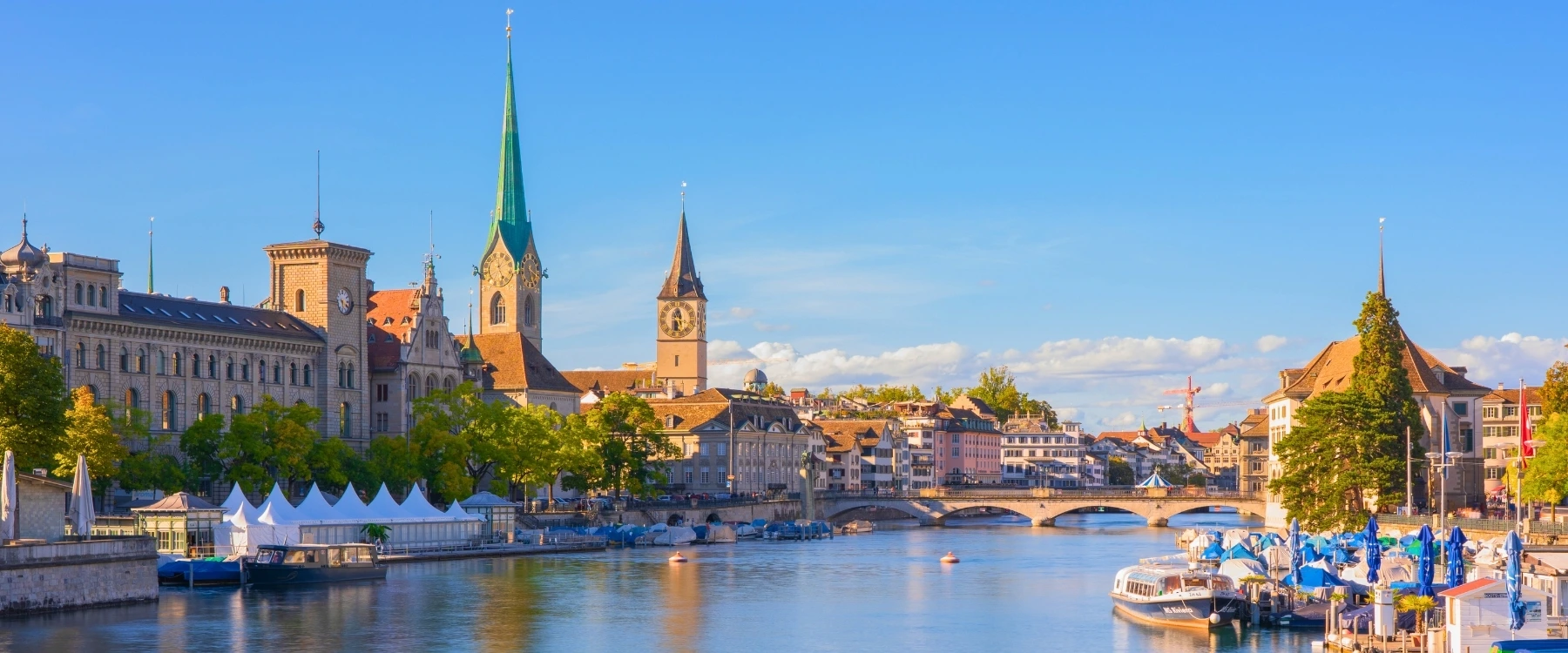
Zurich offers a transport network renowned for its punctuality and coverage. Trams, buses, regional trains, and lake boats integrate seamlessly under the ZVV system, allowing travelers to reach city landmarks, lakeside promenades, and Alpine rail links with ease. Zurich Airport (ZRH) ranks among Europe’s most efficient hubs, ensuring smooth arrivals and departures. Hotels and venues maintain Swiss precision in service, from swift check-ins to responsive concierge support. For business travelers, modern conference facilities are readily accessible; leisure visitors benefit from clear signage and multilingual assistance. Reliable infrastructure means minimal waiting, maximizing time for exploration or relaxation. Opting for Zurich ensures that transit, accommodation, and daily logistics align to create a hassle-free trip.
Learn More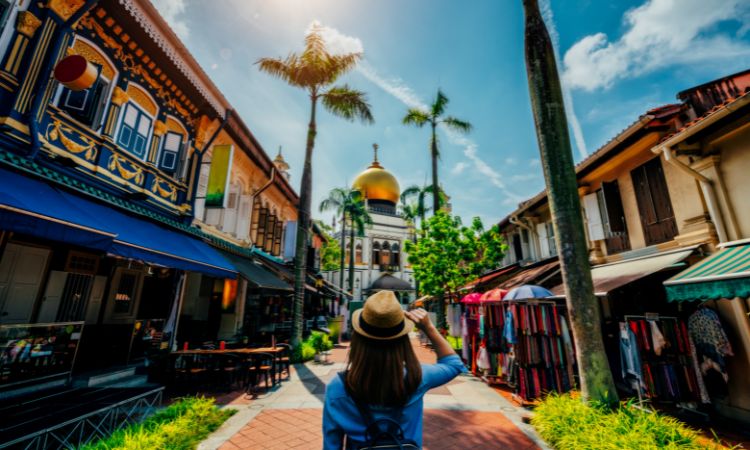
Zurich’s cultural tapestry spans medieval to modern. The Old Town’s guild halls, churches, and hidden courtyards convey centuries of history. Museums such as Kunsthaus Zürich and Swiss National Museum showcase art and artifacts reflecting local and international narratives. Contemporary creativity thrives in Zurich West’s galleries and studios, while festivals—film, literature, and music—draw global participants. Culinary culture blends Swiss classics with global flavors, offering fondue and rösti alongside fusion cuisine. Markets feature artisanal crafts and regional produce. Engaging in workshops—woodcarving, chocolate making—provides hands-on insight into traditions. This cultural diversity ensures that every visitor encounters both authentic Swiss heritage and innovative expressions.
Learn More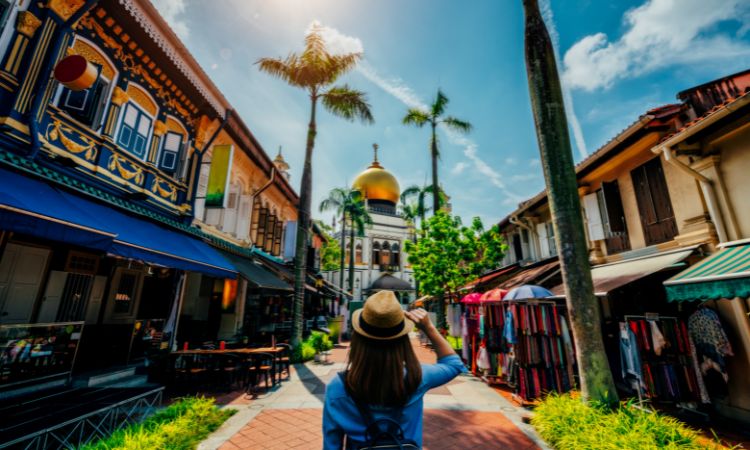
Zurich is framed by natural splendor: Lake Zurich’s clear waters invite swimming, paddleboarding, or boat cruises in summer. Lakeside promenades and parks offer picnic spots with Alpine vistas. Uetliberg mountain, a short train ride plus hike, rewards visitors with panoramic views of the city and Alps at sunrise or sunset. Cycling paths along the Limmat River and lakefront cater to varied fitness levels. In winter, day trips to nearby ski areas are convenient via efficient rail links. Green spaces like the botanical garden and Chinese Garden provide tranquil respites. Whether seeking active pursuits—hiking, watersports, cycling—or peaceful nature immersion amid urban surroundings, Zurich’s landscape accommodates both.
Learn More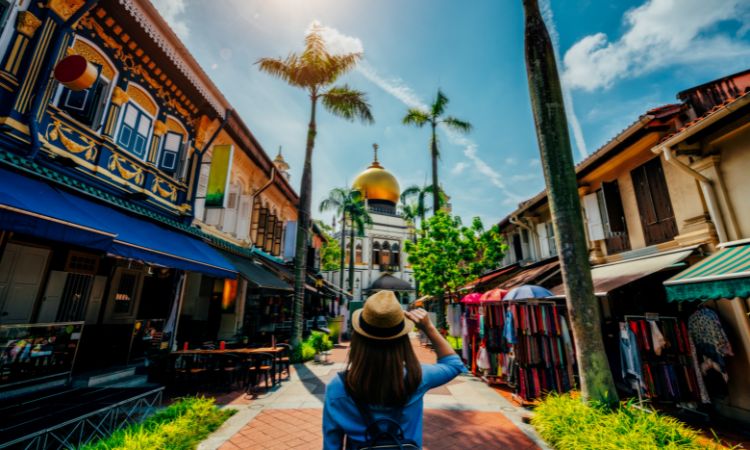
Zurich’s gastronomy balances Swiss tradition and innovation. Regional specialties—Zürcher Geschnetzeltes, artisanal cheeses, premium chocolates—sit alongside Michelin-starred dining showcasing Alpine ingredients in refined formats. Multicultural eateries reflect the city’s international community, offering Asian fusion, Middle Eastern flavors, and global street food stalls at markets. Coffee culture flourishes in specialty cafés; craft breweries and wine bars spotlight local and European beverages. Seasonal food events—chocolate fairs, farmers’ markets—encourage immersive tasting experiences. Dietary needs are well catered: vegetarian, vegan, and gluten-free options abound. Culinary tours and cooking classes enable deeper engagement with Swiss flavors. Zurich’s food scene ensures memorable meals for all preferences and budgets.
Learn More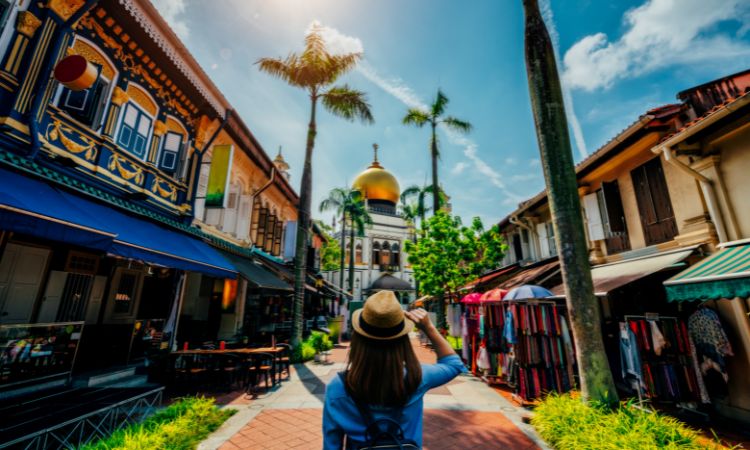
Zurich consistently ranks among the world’s safest cities. Low crime rates, well-lit public areas, and efficient emergency services contribute to peace of mind. Public transport runs late and reliably, supporting safe travel at night. Accommodations uphold high hygiene and security standards. Locals speak multiple languages and are courteous, aiding communication. Health systems and water quality meet top standards. Respecting local etiquette—quiet enjoyment of shared spaces, punctuality—enhances interactions. Accessibility features ensure travelers with reduced mobility can navigate with ease. Zurich’s safe and welcoming ambiance allows visitors to explore with confidence, whether solo, as a family, or in groups.
Learn More
Zurich shines in every season. Summer (June–August) offers lake swims, outdoor festivals, and hiking. Autumn (September–November) brings fall foliage, harvest events in nearby wine regions, and fewer crowds ideal for cultural outings. Winter (December–February) features festive Christmas markets, cozy cafés, and easy access to ski resorts for day trips. Spring (March–May) showcases blooming gardens and comfortable sightseeing conditions. Shoulder seasons provide balanced costs and pleasant weather. Whether seeking vibrant events, nature immersion, or festive charm, Zurich’s seasonal diversity ensures each visit reveals distinctive experiences.
Learn More
Lorem ipsum dolor, sit amet consectetur adipisicing elit. At illo adipisci iusto
From

Because more than 268 other customers have loved us too

Demonstrates commitment to user data security through encryption and secure payment practices
Learn More
Demonstrates commitment to user data security through encryption and secure payment practices
Learn More
Demonstrates commitment to user data security through encryption and secure payment practices
Learn More
Demonstrates commitment to user data security through encryption and secure payment practices
Learn More
Quality as judged by customers. Book at the ideal price!


/ person
/ person
/ person
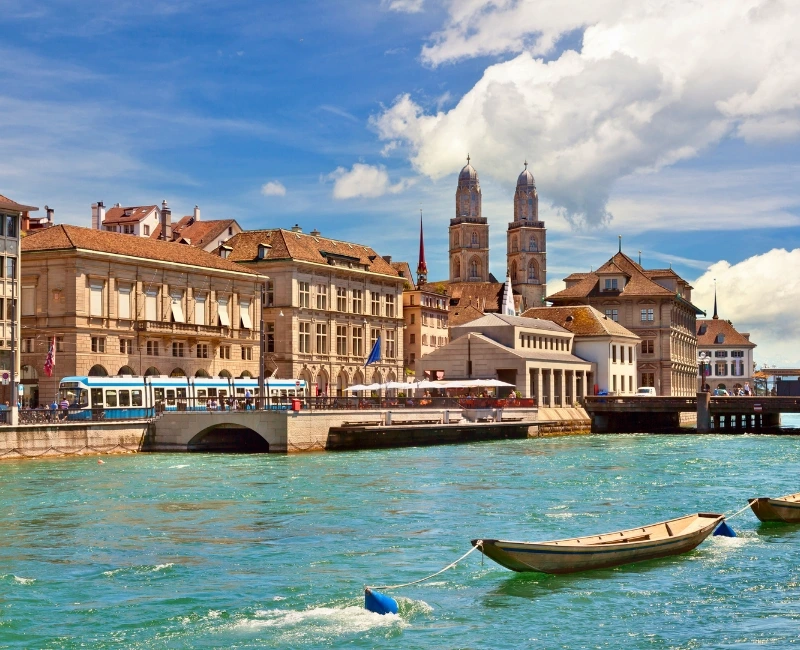
Zurich’s Old Town (Altstadt) is a living tapestry of Swiss heritage, where every winding alley and centuries‑old façade invites discovery. Start your journey at the eastern terminus of Bahnhofstrasse, where the sleek modernity of upscale boutiques gives way to the warm, honeyed sandstone of medieval buildings. Cross the Rennweg into the quiet pedestrian lanes of Augustinergasse and Pelikanstrasse, each street lined with painted guild signs that once advertised the trades of tanners, coopers, and bakers. Pause in hidden courtyards to admire carved stone wells and artisan workshops where leather goods, fine lace, and handcrafted music boxes still emerge under the hands of master craftsmen.A gentle ascent to Lindenhof hill—once a Celtic fortification and later a Roman stronghold—rewards you with panoramic views of the Limmat River veining through terracotta rooftops and distant Alpine peaks. Back at street level, the Grossmünster’s twin towers loom overhead; legend credits its founding to Charlemagne, and the church’s Reformation–era history unfolds amid its Romanesque arches. Climb the narrow stone staircase of the south tower to stand among bird’s‑eye vistas of spired churches, glimmering waterways, and the green ribbon of the lake beyond.Less than a ten‑minute stroll away, the Fraumünster seduces with its kaleidoscopic stained‑glass windows by Marc Chagall and Augusto Giacometti, which bathe the Gothic nave in jewel‑toned light. Nearby cafés spill onto cobblestones, beckoning you to linger over Swiss chocolate confections and expertly pulled espresso, each sip a moment to savor the same ambiance that once inspired writers and scholars.Along the riverbank, the Rathaus’s pointed arches and frescoed façade offer a quieter setting for riverside promenades. Locals gather here to jog the flat pathways or rest on benches, watching swans glide and barges drift past. By evening, the Old Town’s intimate jazz cellars and speakeasy‑style bars come alive: vaulted brick interiors host live music that drifts into the streets, while softly illuminated lanterns cast a warm glow on centuries‑old stone.Seasonal events keep the quarter pulsing with local life. In December, Christmas markets transform squares into festive enclaves of wooden chalets, fragrant with mulled wine and fresh pretzels. Summer evenings bring open‑air classical concerts in church courtyards, where strings and woodwinds reverberate against ancient walls. Historical walking tours weave tales of powerful guilds, merchant fortunes, and architectural reinventions, bringing to life the strata of history beneath modern pavement.Whether you spend a half‑day tracing major landmarks or a full day uncovering tucked‑away gems—a discreet fountain irrigated since the 1300s, a merchant’s palazzo turned design gallery, or a family‑run patisserie perfecting Swiss sweet rolls—the Old Town offers an immersive, multilayered journey. Each step through Altstadt reveals how Zurich has preserved its medieval soul while embracing contemporary life, making this district an essential starting point for any traveler seeking authentic Swiss cultural immersion.
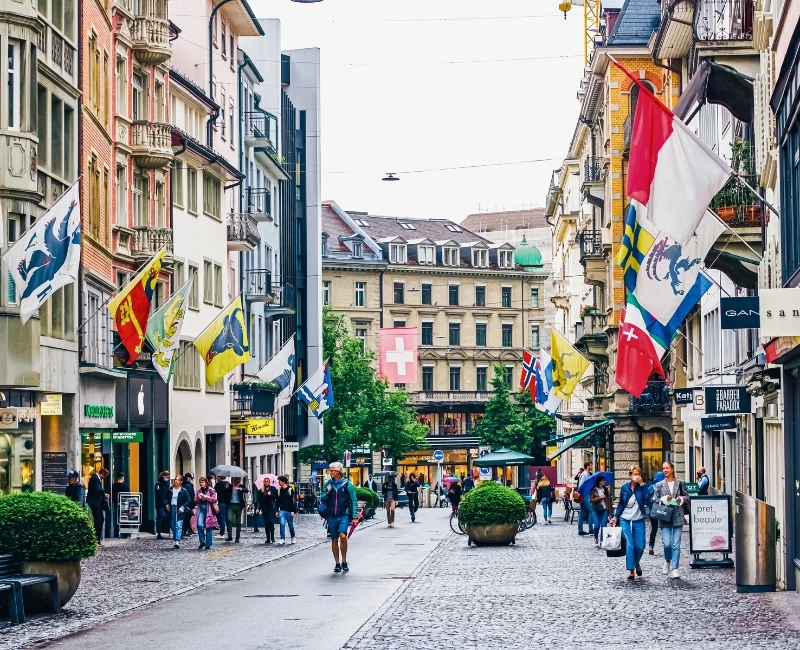
Zurich’s skyline symbolizes the city’s dual identity as both a centuries‑old municipality and a forward‑looking hub of finance, design, and technological innovation. The glittering façades of Bank strasse and Paradeplatz reflect global banking powerhouses, while the sleek towers of the Prime Tower and Dufry Building stand as icons of Swiss precision and corporate strength. Yet just beyond these financial bastions lies Europaallee, a mixed‑use district reimagined from former rail yards around Zurich Hauptbahnhof. Here, cutting‑edge office buildings clad in glass and steel share pedestrian‑friendly plazas with artisanal cafés, designer shops, and the pulsating culture venue Plaza Klub.Continue westward into Zürich West, a former industrial enclave transformed into one of Europe’s most dynamic creative quarters. Under the soaring arches of the former railway viaducts, the Viadukt Arches host independent boutiques selling minimalist homeware and upcycled fashion, while weekend markets fill the space with local produce, organic cheeses, and hand‑crafted ceramics. Beyond the arches, red‑brick factories house galleries like Löwenbräu Areal, where immersive installations by emerging international artists sit alongside performances in cavernous halls. Tech startups and incubators have set up shop in repurposed warehouses—Impact Hub and BlueLion—fostering an entrepreneurial atmosphere where hackathons and design sprints run alongside craft beer tastings.Zurich’s dedication to sustainable urban planning manifests in projects like Rennweg Yard, where green roofs and energy‑efficient façades coexist with public art installations. Skateboarders carve lines through repaved plazas, contrasting with suited professionals hurrying to meetings. Architecture aficionados will marvel at the juxtaposition of Gottfried Semper’s stately ETH main building with contemporary wonders such as the Mobimo Tower, designed by Diener & Diener architects, which elegantly curves to maximize daylight and city vistas.Culinary innovation parallels design ingenuity. Kaufleuten restaurant and Stucki by Tanja Grandits push Alpine ingredients into inventive tasting menus, while pop‑up kitchens in co‑working spaces challenge palates with fusion creations—sea buckthorn caviar atop beetroot carpaccio, for example. Coffee culture thrives in micro‑roasteries like Turmöl, where single‑origin beans are freshly ground amid industrial-chic décor.Business travelers and creatives alike converge at conference venues such as Kongresshaus Zürich, which hosts international forums on sustainability, fintech, and design trends. Workshops in 3D printing, AI ethics, and circular‑economy principles regularly open their doors to curious visitors. Evening events extend into repurposed industrial clubs—Helsinki Club and Fabrik42—where electronic music and live bands share stages with pop‑up galleries.Through its revitalized districts, Zurich demonstrates how reverence for heritage can coexist with a relentless pursuit of progress. The city’s modern quarters are living laboratories where tradition meets tomorrow, offering professionals and sightseers alike a chance to witness Swiss innovation in real time while strolling through transformed industrial landscapes that hum with creative energy.
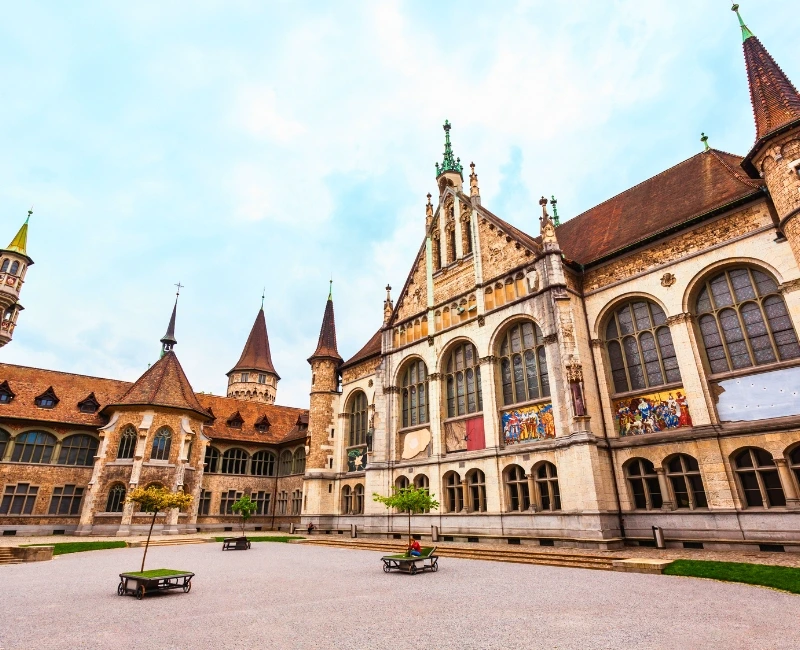
Zurich boasts a cultural richness that appeals to art enthusiasts, history buffs, and live‑performance lovers in equal measure. At the heart of this tapestry lies the Kunsthaus Zürich, home to one of Europe’s most significant collections, where corridors lead from 13th‑century religious paintings through Giacometti’s introspective bronze figures to Rothko’s meditative color fields. The museum’s vaulted Gothic halls and sunlit galleries offer rotating exhibitions and retrospectives, ensuring each visit feels fresh.A short tram ride brings you to the lakeside elegance of Museum Rietberg, set within a verdant park. Specializing in non‑European art, its pavilions house ancient Buddha figures, intricate Japanese screens, and African masks displayed with reverence. The tranquil gardens offer outdoor sculptures and seasonal sculpture trails, making the experience a contemplative journey across continents and centuries.Back in the city centre, the Swiss National Museum weaves a narrative of Swiss identity, from medieval armor and folk costumes to interactive exhibits on modern design. Its turreted castle‑like exterior contrasts with innovative multimedia presentations inside, celebrating Switzerland’s evolution. For avant‑garde impulses, the birthplace of Dadaism—Cabaret Voltaire—continues to lead with experimental performances, poetry readings, and installations that challenge conventions, reminding visitors that Zurich’s artistic influence extends far beyond Swiss borders.ETH Zurich’s main building, conceived by renowned architect Gottfried Semper, invites architecture tours that trace the interplay of Renaissance revival and modern engineering, while the Architekturforum Zürich hosts lectures on sustainable urban design and showcases student projects. Music aficionados find solace in Tonhalle Zürich, whose neoclassical concert hall resonates with symphonic masterpieces by the Tonhalle Orchestra, and at Moods, a waterfront venue renowned for jazz, world music, and improvisational performances.Zurich’s theatrical landscape—anchored by the venerable Schauspielhaus—presents Swiss premieres and international drama, while dance companies perform contemporary choreography in spaces like the Schiffbau, a former shipbuilding hall turned performing arts complex. Annual festivals underscore these offerings: the Zurich Film Festival screens global cinema alongside industry panels; Zürich Art Weekend activates private galleries through open studios and curated tours; and the Literaturfestival Zürich brings authors from across the globe for readings in historic libraries and cafés.For families, the Kindermuseum CREAVIVA offers interactive art workshops; the Swiss Science Center Technorama near Winterthur—easily reached by train—encourages hands‑on experimentation. Even the city’s public spaces double as galleries: mural walks in Kreis 4 and sculpture trails along the lake provide spontaneous encounters with creativity. Whether you spend an afternoon immersed in classical masterpieces, an evening at an experimental performance in a reimagined industrial space, or a weekend exploring cross‑cultural narratives at world‑class museums, Zurich’s cultural infrastructure caters to every curiosity, weaving a vibrant mosaic of the past and future.
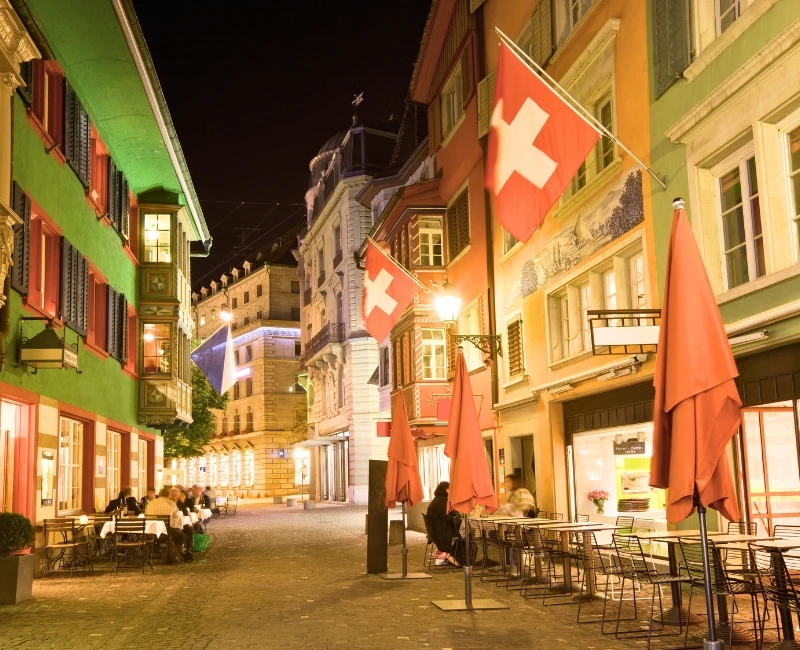
Zurich’s festival calendar pulses year‑round, offering a rhythm of celebrations that reflect both local traditions and global trends. August’s Street Parade stands as a testament to the city’s forward‑thinking spirit: half a million dancers and revelers clad in vibrant costumes converge along the lakeshore, following colossal techno‑floats thrumming with DJ beats. This electronic‑music phenomenon celebrates unity, tolerance, and the transformative power of dance, filling the air with euphoric energy from Sechseläutenplatz to Zurichhorn.As summer wanes, September ushers in the Zurich Film Festival, drawing filmmakers and cinephiles into state‑of‑the‑art cinemas across the city. World premieres, masterclasses, and lively red‑carpet events blend industry networking with public screenings, while outdoor showings at Arena Cinemas under the stars evoke open‑air charm. For design aficionados, Zurich Design Week spotlights emerging talents in graphic and industrial design, hosting exhibitions in repurposed factories and discussions at the Museum für Gestaltung.When winter arrives, Zurich’s historic squares glow with festive cheer. The Christkindlimarkt at Zurich Hauptbahnhof transforms the station’s grand hall into a realm of twinkling lights and wooden chalets selling handcrafted ornaments, woolen mittens, and steaming glühwein. Simultaneously, the Wienachtsdorf market at Werdmühleplatz offers a cozier, neighborhood ambience where residents and visitors mingle over roasted chestnuts. On New Year’s Eve, revelers converge at Sechseläutenplatz or ascend Uetliberg’s summit for panoramic fireworks displays, toasting the arrival of the new year against Alpine silhouettes.Zurich also honors medieval heritage through Sechseläuten, a spring ritual where guild members in colorful costumes process through Bahnhofstrasse, culminating in the ceremonial burning of the Böögg—an effigy of winter—symbolizing the transition to warmer days. Culinary festivals pepper the seasons: Knabenschiessen cheeknic shooting festival in September pairs target shooting competitions with bratwurst stands; the Zürcher Weintage in May celebrates regional vintners with tastings and vineyard tours; and the London Street Food Festival brings international flavors to Birchermüesliplatz.Sports enthusiasts mark calendars for the Zurich Marathon and Weltklasse Zürich, the Diamond League athletics meet drawing the world’s top track and field athletes. Music lovers find summer concerts in Kronenhalle gardens and classical orchestras performing at the Tonhalle Open Air on Sechseläutenplatz. Literary minds converge at the Literaturfestival Zürich, which hosts readings in atmospheric venues such as Höngger Kirche.Many events offer free programming—open‑air concerts, street art installations, and pop‑up performances—making Zurich’s festive spirit accessible to all. However, major festivals warrant early planning: secure accommodations and event tickets well in advance to avoid sold‑out disappointments. Whether you come to dance in a techno parade, sip mulled wine at a historic market, or cheer Olympic‑caliber athletes under floodlights, Zurich’s festival and event scene weaves communal celebrations into the city’s fabric, creating unforgettable shared moments that reflect its dynamic, inclusive ethos.
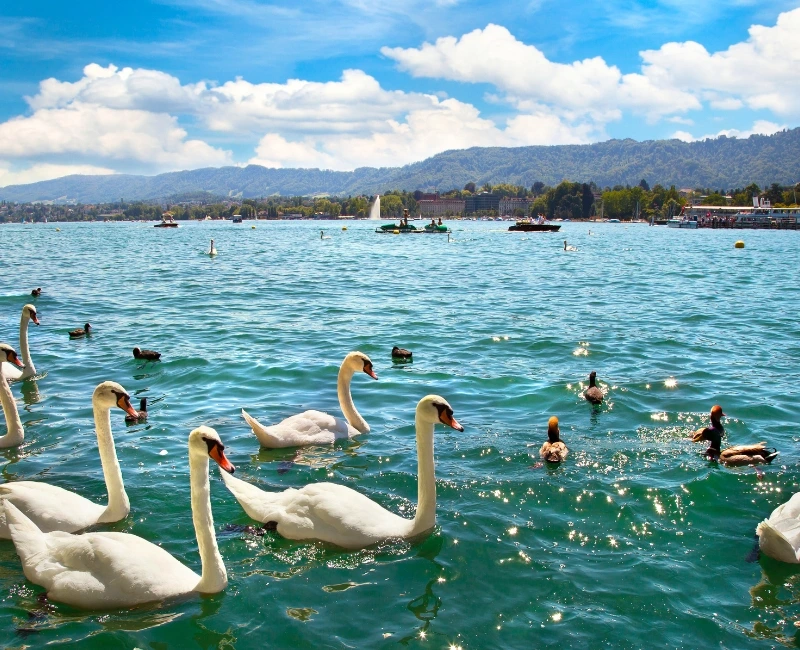
Lake Zurich is the aquatic heart of the city, beckoning residents and visitors alike to experience its crystal‑clear waters and enchanting shoreline. In the summer months, the designated lidos—Strandbad Mythenquai, Tiefenbrunnen, and Seebad Utoquai—offer guarded swimming areas with modern changing facilities, sun terraces, and café kiosks. Each lido has its own character: Mythenquai’s expansive lawns invite picnics, Tiefenbrunnen’s Art Nouveau pavilion recalls 19th‑century leisure, and Utoquai’s proximity to Old Town combines urban convenience with lakeside tranquility.For those seeking activity on the water, boat rental stations near Bürkliplatz offer stand‑up paddleboards, kayaks, and small electric launches, perfect for silently gliding past swans and historic quays. Guided SUP tours introduce novices to basic techniques while pointing out architectural landmarks along the Limmatquai and Quaibrücke. Public boat cruises run year‑round: hop aboard a classic paddle steamer for a two‑hour “round trip,” complete with commentary on lakeside villas, hidden bays, and the forested hills of Horgen. Evening dinner cruises under lanterns create an unforgettable setting for sampling Swiss delicacies over gentle waves.A well‑maintained lakeside promenade extends from Enge to Küsnacht, lined with plane trees and cycle paths. Families and cyclists favor the flat terrain, which continues beyond Zurich’s municipal boundaries through charming villages. Bike‑and‑boat tickets allow for flexible itineraries: pedal to a lakeside winery, sample a crisp Riesling, then board a return ferry. Fishing enthusiasts, after obtaining a permit, can try their luck for perch or pike at dawn when the lake’s surface lies mirror‑flat.As autumn arrives, the lakeshore’s foliage transforms into a palette of reds and golds, reflecting in tranquil waters—photographers flock to Felsenegg viewpoint for sweeping vistas. In winter, while swimming retreats beneath layers of frost, lakeside walks remain invigorating; Sechseläutenplatz transforms into an ice rink, inviting playful spins under historic spires. Wellness seekers can book therapeutic sessions at the nearby Bürgenstock Alpine Spa, where heated outdoor pools overlook the lake, blending mountain and water in a restorative embrace.Birdwatchers and nature lovers explore the Schutzgebiet Greifensee reserve, a short train ride away, where migratory birds pause among reed beds. Wildlife‑spotting cruise operators guide small groups through protected stretches, sharing ecological insights. Seasonal events—open‑air yoga classes on floating platforms, lakeside music festivals, and synchronized dragon‑boat races—animate the water’s edge with communal energy.Lake Zurich’s versatile character—recreational haven, scenic backdrop, and cultural stage—ensures that every visitor finds their rhythm, whether seeking adrenaline‑fueled paddles, serene boat rides, or lakeside leisure beneath Swiss skies.
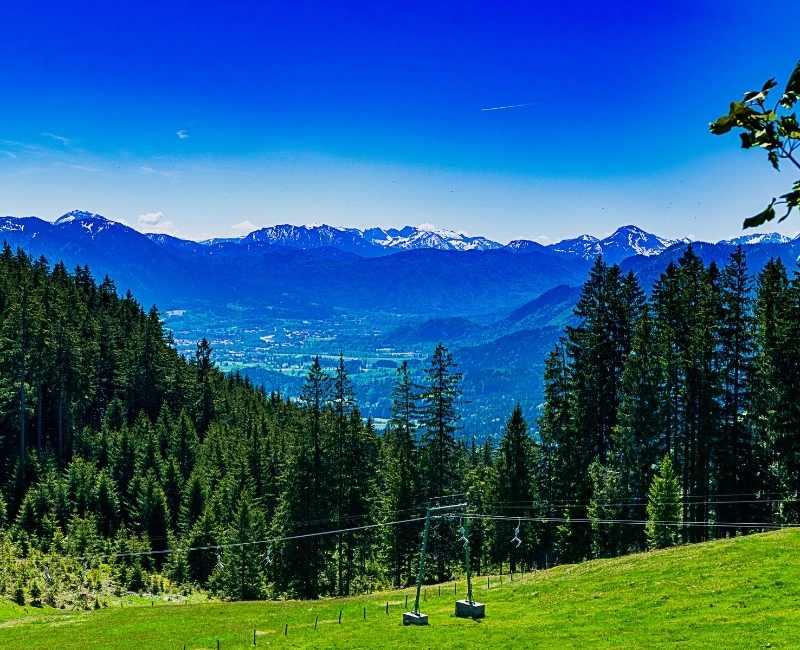
Zurich’s enviable location and world‑class transport network make it the perfect jumping‑off point for Alpine escapades reachable in a single day. From Zurich Hauptbahnhof, Swiss Federal Railways whisk you through rolling valleys and past sweeping lakes toward mountainous destinations tailor‑made for every season. In winter, dedicated ski trains and buses deliver you, skis in tow, to resorts such as Flumserberg—a family favorite with gentle nursery slopes and panoramic views of Lake Walen—and Engelberg‑Titlis, whose glacier high above clouds ensures reliable powder and thrilling ice‑fly experiences on the Rotair rotating gondola. Ski packages often bundle rail travel, lift tickets, and equipment rental, streamlining logistics for maximum piste time.When snow recedes, these same resorts transform into hiking and biking meccas. Trails at Engelberg fan out through alpine meadows dotted with edelweiss and gentian, while Mount Rigi—the “Queen of the Mountains”—offers cogwheel‑train ascents and panoramic routes overlooking Lakes Zug and Lucerne. Beginner cyclists find gentle grade passes in the Jungfrau region, accessible via Zurich‑Interlaken Express, then onward trains to Grindelwald or Wengen, where downhill zones and lifts cater to mountain‑bike clubs.Train journeys to Chur or Davos link you to the dramatic panoramas of Graubünden, where deep‑valley hikes and via ferrata routes challenge adventurous spirits. In the warmer months, guided alpine runs—paragliding tandem flights from Mount Rigi or snow‑groomed glacier runs at Jungfraujoch—deliver unforgettable adrenaline.Culinary stops enrich these excursions: mountain‑top huts serve warming barley soup and rye bread, while gourmet restaurants—like Schynige Platte near Interlaken—blend Swiss‑German specialties with innovative pairings, all enjoyed with trademark Alpine hospitality. Throughout, the Swiss Travel Pass or regional day passes guarantee seamless transfers on trains, buses, and cable cars, often at a 50 percent discount.Even brief day trips imprint lasting memories: sunrise over snow‑dust‑capped peaks, the scent of pine in crisp mountain air, and the comforting clink of cowbells echoing across green pastures. Returning to Zurich in the evening, you can trade hiking boots for city lights, knowing that the Alps’ grandeur lies just beyond your doorstep—testament to Switzerland’s harmonious balance of urban sophistication and natural majesty..
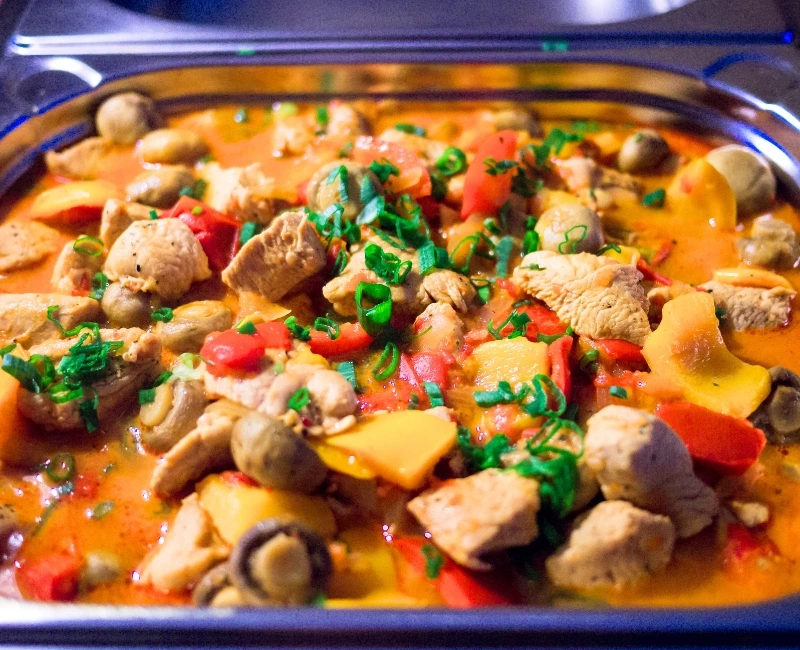
Zurich’s gastronomic scene mirrors its multicultural fabric, weaving together Swiss traditions and global influences across captivating market stalls, hearty taverns, and refined eateries. Early risers head to Bürkliplatz on Tuesday, Thursday, and Saturday mornings for fresh produce—from crunchy apples and fragrant berries grown in Swiss valleys to tender asparagus and heirloom carrots—arranged in vibrant, geometric displays. Nearby, cheese vendors entice passersby with wedge samples of nutty Appenzeller and creamy Tomme Vaudoise, each morsel a testament to the region’s dairy heritage. Artisanal bakers fill wicker baskets with Zopf, a braided egg‑rich bread, and delicate Bircher Müsli cold oats, Switzerland’s enduring breakfast staple.As midday approaches, the Oerlikon market spotlights international flavors: Persian flatbreads topped with Sumac chicken, Vietnamese bánh mì ladles, and Indian vegetable curries served from gleaming stainless‑steel warmers. These multicultural offerings reflect Zurich’s status as a global crossroads. Back in the historic center, the Markthalle in Zurich West unites local butchers, seafood specialists, and organic farmers under one soaring steel-and-glass roof; elegant wine bars here let you sample Weissburgunder and Gamaret from nearby Swiss vineyards.At dinnertime, traditional Swiss fare takes center stage in cozy taverns: settle into a corner table at Zeughauskeller for a steaming pot of Raclette, where melted cheese is scraped over boiled potatoes and pickles, or savor Zürcher Geschnetzeltes, tender slices of veal in a creamy mushroom sauce accompanied by golden Rösti. For epicurean adventures, Zurich boasts multiple Michelin‑starred establishments—Ecco Zürich and The Restaurant at the Dolder Grand—where chefs reimagine Alpine ingredients with avant‑garde techniques, pairing trout roe with vegetable foam and foraged herbs.Zurich’s chocolate heritage shines at historic chocolatiers like Confiserie Sprüngli, where Luxemburgerli macarons and truffle‑filled bonbons tempt even the staunchest dieters. For a behind‑the-scenes look, join a bean‑to‑bar workshop at Max Chocolatier, where you learn tempering techniques and create personalized bars. Wine enthusiasts explore the slopes of Zurichberg and Weinland, tasting Pinot Noir and Riesling vines cultivated within city limits, or venture to the Zurich Wine and Dine Festival, an annual showcase of regional vintages alongside gourmet street-food stalls.Evening markets—such as the summer Street Food Festival at Sechseläutenplatz—gather food trucks dishing everything from Korean kimbap to Swiss spicy bratwurst, with live music stages drawing crowds beneath string lights. Whether sampling local cheeses, collecting artisanal souvenirs in markets, or indulging in haute cuisine, Zurich’s food scene offers a rich spectrum of flavors that celebrate quality, sustainability, and creativity.
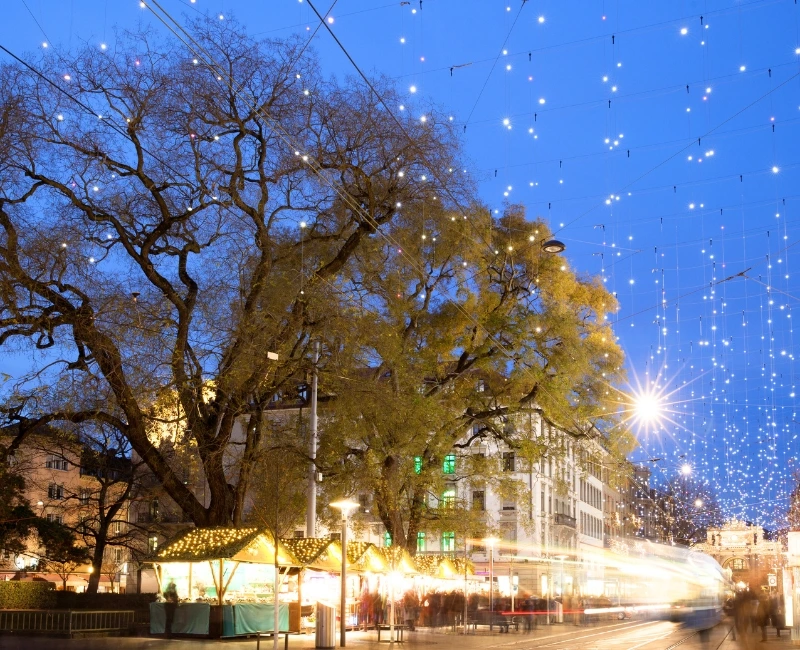
As daylight fades over the Limmat River, Zurich transitions into a refined yet spirited nightlife scene that caters to diverse tastes and temperaments. Early evenings often begin at Widder Bar in the historic Altstadt, where expert mixologists craft bespoke cocktails—think absinthe‑infused sour laced with edible flower—amid elegant wood-paneled interiors. Wine aficionados favor Sala, a hidden gem tucked beneath vaulted arches, where sommelier‑led tastings navigate Swiss, French, and Italian vintages by the glass.Dinners range from urban‑chic bistros in Kreis 4 serving modern Mediterranean‑Swiss fusion to classic Beizli taverns in Langstrasse, where hearty Swiss-German specialties mingle with global street-food influences. Afterward, live music venues beckon: Moods offers intimate jazz on Tuesday nights and funk‑fusion grooves later in the week, while El Lokal in Zurich West hosts indie‑rock and experimental electronic acts under raw brick arches.For theater and dance, the Schauspielhaus Zürich stages contemporary and classical plays, often in bilingual productions, while Opernhaus Zürich presents opera and ballet in a grand baroque‑revival hall. Film lovers can catch late screenings at Arena Cinemas, an open‑air summer venue on Kreis 5 rooftops, or at Pandora Film, a cinema specializing in avant‑garde and arthouse fare.As midnight approaches, Zurich’s clubs open their doors: Hive and Supermarket in Kreis 4 host techno and house DJs, drawing crowds onto minimalist dance floors equipped with top‑tier sound systems. Dress codes are relaxed but respectful—Swiss clubs value ambiance and courtesy. For those seeking something different, Exil and Kaufleuten regularly host live stand‑up comedy nights, spoken‑word events, and themed quiz evenings, blending humor and conviviality.Late‑night eats are easy to find: Langstrasse’s 24‑hour doner kebab stands, street‑corner pastry shops in Altstadt, and rooftop food trucks at Frau Gerolds Garten serve waffles topped with vanilla ice cream or dumplings bathed in chili oil. Nighttime trams and buses run reliably into the early hours, and licensed taxis ensure safe returns to riverside hotels.Throughout the year, seasonal events add sparkle: summer Jazz Nights by the lake, winter Tapas and Tango in candlelit cellars, and New Year’s Eve fireworks launched from barges on Lake Zurich. For an elevated vantage, rooftop bars such as Clouds offer sweeping city‑light panoramas paired with live DJs and panoramic lounges.Zurich’s nightlife weaves together sophistication, creativity, and genuine Swiss hospitality. Whether you sip a meticulously crafted cocktail, lose yourself in underground beats, or applaud a dramatic performance, the city’s after‑hours offerings provide dynamic, memorable chapters to your Swiss adventure.
No ads. No trails. No commitments


Alice Roses
London, England
51 ST MATTHIAS ROAD
NOTTINGHAM, NOTTINGHAMSHIRE
NG3 2HF
Hours: 8:00 - 17:00, Mon - Sat
support@johnsonholidays.com